Adam spent his twenties in kitchens. Graveyard line cook, then chef, then helping open restaurants, then studying at the French Culinary Institute in New York, then almost moving back to work there permanently. Instead, he left restaurants entirely and went to work at a food cooperative in Tucson — drawn by a growing need to understand where food actually comes from.
That decision changed everything. Buying for the co-op introduced him to chocolate as a specialty food category, to the idea that cacao from different origins tastes fundamentally different, and to a small but serious community of people who cared about both. A few years later, working at a market in Portland, he built what was likely the largest craft chocolate retail program in the country — over 1,200 individual bars, with free public tastings every week. He was not yet making chocolate. He was obsessed with it, which is a different thing, and arguably a necessary precondition.
He started making chocolate in his living room. Secondhand appliances, a wet grinder ordered online, batches that were, by his own account, terrible. The difficulty made it more interesting. He read everything he could find. He moved to Tucson with a business plan and not much else, and in 2017 opened Monsoon Chocolate on a shoestring and a willingness to figure things out under pressure. The early days were scrappy. Then a mention in Food & Wine. Then awards. Then demand that consistently outpaced production capacity for years.
Athene grew up in Stuttgart, Germany, shaped by Korean and German-American food culture on both sides of her family — the kind of upbringing where knowing what good food tastes like is not a hobby but a baseline. She moved to Omaha as a teenager, came to Tucson to study at the University of Arizona, left a pre-med program, studied fine arts, worked at a bookstore. Then, without any relevant experience and not expecting to be hired, she applied for a pastry assistant position at a local pie shop. She got the job. Within a year she was recruited to build and lead a pastry program at a well-regarded Tucson restaurant. Within a year after that, Adam asked if she'd consider joining Monsoon.
By then they were already close friends — the kind of friends who talk about food the way other people talk about everything else. They grew up differently and come from different places, but share a palate and a set of standards that turns out to be the most important thing when you are trying to make something genuinely good.
Athene joined Monsoon on opening day in 2018. She built the pastry program from scratch, and as the chocolate side of the business grew, she moved into it — slowly at first, then entirely. The bon bon program is hers. The ganaches, pralines, and gianduja are made from scratch under her direction, and the hand-decorated shells that define Monsoon's visual identity reflect her eye as much as her technique. She and Adam have collaborated on products that have won national awards. Adam made her a partner in 2020. She is now Head Chocolatier and co-owner, running all production.
Monsoon is the creative collaboration between the two of them, supported by a small but dedicated production team.


Handcrafted in the Sonoran Desert
Making chocolate is a difficult task to begin with and making chocolate in the desert is quite the undertaking. However, we believe that anything worth doing should be a challenge.
The chocolate we make is truly a collaboration with the farm workers who grow, harvest, ferment, and dry the cacao. Our goal is to honor their hard work by processing the cacao as minimally as possible to reveal the beautiful and complex flavors inherent in the beans.


Transparent Sourcing
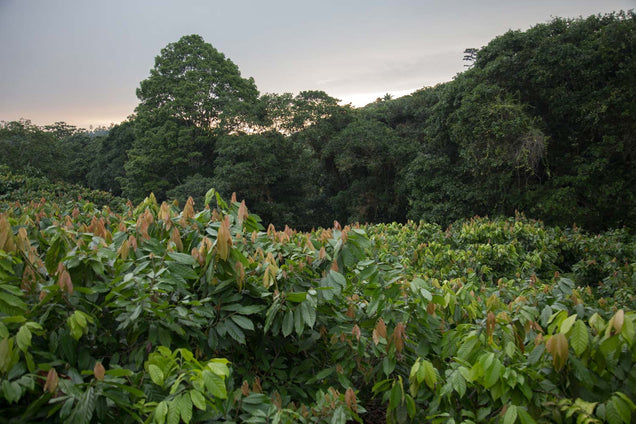
Costa Esmeraldas
Esmeraldas, Ecuador
Costa Esmeraldas is a family-owned, single estate farm that is operated entirely by the Salazar family. Located in the Esmeraldas province of Ecuador, a region not traditionally known for fine flavor cacao, the farm has reclaimed land once occupied by cattle pastures. The Salazars have decades of expertise in mineral exploration, environmental remediation, and also operate Fundación Salazar, an independent non-profit that operates with the mission to create lasting benefits from communities nearby resource extraction operations.
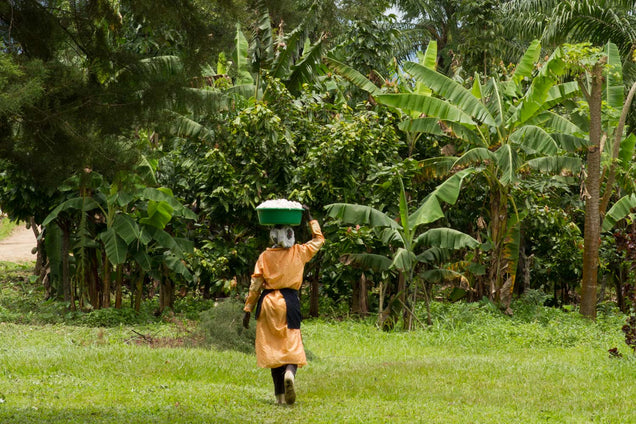
Latitude Trade Co.
Bundibugyo, Uganda
Latitude Trade Company is an Ugandan registered social enterprise owned and managed by Jeff Steinberg. The company purchases wet cacao from over 1000 organic small holder farmers in several communities in the district of Bundibugyo, 52% of whom are women. In the village of Bumate, LTC operates a centralized fermentation facility and warehouse. Not only does the company produce fine flavor cocoa for export, they also manufacture award winning chocolate in Kampala under the brand name Latitude Craft Chocolate.
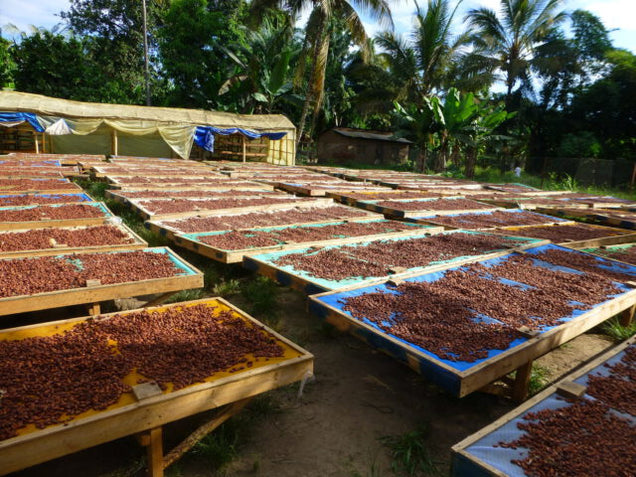
Kokoa Kamili
Kilombero Valley, Tanzania
Kokoa Kamili was founded by Brian LoBue and Simran Bindra, in the Kilombero Valley of Tanzania. The company operates a central fermentary that works with nearly 3000 small shareholder farms. In an area that has historically received some of the lowest prices for cocoa in the country, Kokoa Kamili is now paying a premium well above market rate to the farmers for wet cacao, and controlling the post-harvest processing themselves. This results in higher compensation and a reduced workload for the farmers, and ultimately produces a more consistent, high quality product.
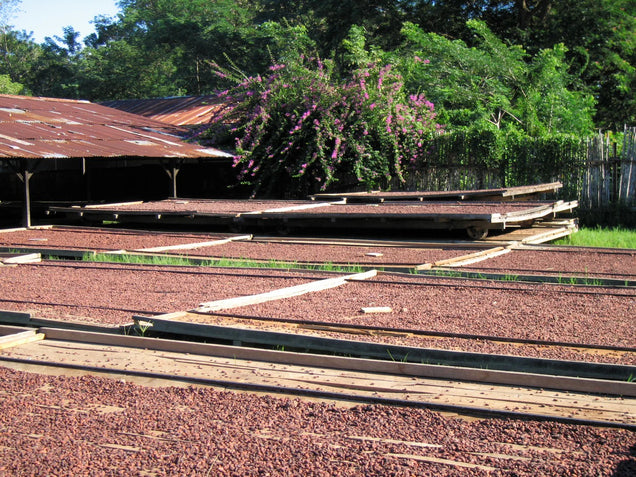
Bejofo Estate
Sambirano Valley, Madagascar
Bejofo Estate is an organic cacao orchard that is part of the larger Akesson Estate in northwest Madagascar’s Sambirano valley. Managed by Bertil Akesson, who has specialized in growing fine cocoa, pepper, and other spices for many years, Bejofo Estate produces 300 tons of cocoa a year. The cocoa has been designated as certified “Heirloom” by the Heirloom Cacao Preservation Initiative (HCP).
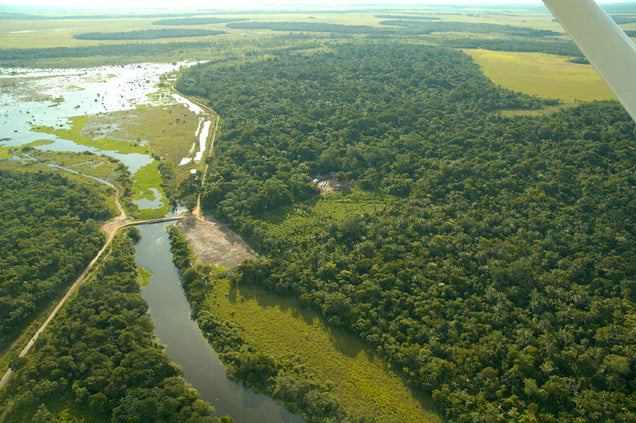
Hacienda Tranquilidad
Itenez, Bolivia
Hacienda Tranquilidad, a farm producing both wildcrafted and single-estate cacao, is located on 1,500 acres deep in the Bolivian Amazon Basin. Volker Lehmann, the estate's owner, was the first person in the modern age to commercialize the endemic Beniano cacao variety. The massive wild or "Silvestre" cocoa trees grow in an 850-acre natural forest, where they are left alone each year until harvest. These tiny beans have been designated as certified “Heirloom” by the Heirloom Cacao Preservation Initiative (HCP).
Our Process
We craft chocolate in small batches at our factory in the historic Santa Rita Park neighborhood of Tucson, Arizona, using cocoa beans from all over the world. The process of making fine flavor chocolate starts long before the cocoa beans reach our factory.
On the Farm
-
01
Grow

Theobroma Cacao grows between the tropics of Cancer and Capricorn.
-
02
Grow

Tiny flowers develop into seed pods that grow from the limbs and trunks of the trees.
-
03
Harvest

Seed pods are selected by hand at peak ripeness, cut from the tree, and collected.
-
04
Harvest

Pods are cracked open and the inner fruit and seeds are removed.
-
05
Ferment

Wooden boxes are filled with the wet cacao seeds and are covered with banana leaves or burlap, where they will go through a process of fermentation for about 3-8 days.
-
06
Dry

Boxes are emptied and the seeds are spread out on raised beds to dry in the sun for about 5-7 days. After drying, the seeds – now referred to as cocoa beans – are ready to be bagged and exported.
-
07
Transport

Bags of cocoa are loaded into shipping containers which are transported on large boats that travel to ports all over the world.


In Our Factory
-
01
Sort

Once the cocoa beans arrive in our factory, the very first thing we do is hand sort them, removing debris and beans that do not meet our standards.
-
02
Roast

We develop specific roast profiles that enhance the natural flavors in each cocoa bean origin.
-
03
Winnow

Cocoa beans have a paperlike husk surrounding the nib that needs to be removed after roasting
-
04
Winnow

Beans are crushed and the mixture of husk and nib is separated through a combination of gravity and vacuum force.
-
05
Refine

Cocoa nibs are stone-ground along with sugar (and milk powder, if we are making milk chocolate) over the course of 72–96 hours in a machine called a melanger.
-
06
Conch

The liquid chocolate is agitated and aerated, improving mouthfeel and flavor
-
07
Sieve

The finished chocolate is poured out into large metal containers and allowed to cool.
-
08
Age

Solid blocks of chocolate are aged for a minimum of 30 days in cellar conditions.
-
09
Temper

Solid blocks of chocolate are melted and taken through a process of heating and cooling known as tempering. Chocolate is deposited into polycarbonate molds.
-
10
Mold

Chocolate is deposited into polycarbonate molds which are placed onto a cooling rack to crystallize for and hour or so.
-
11
Package

Finished chocolate bars are turned out of their molds and packaged by hand.


